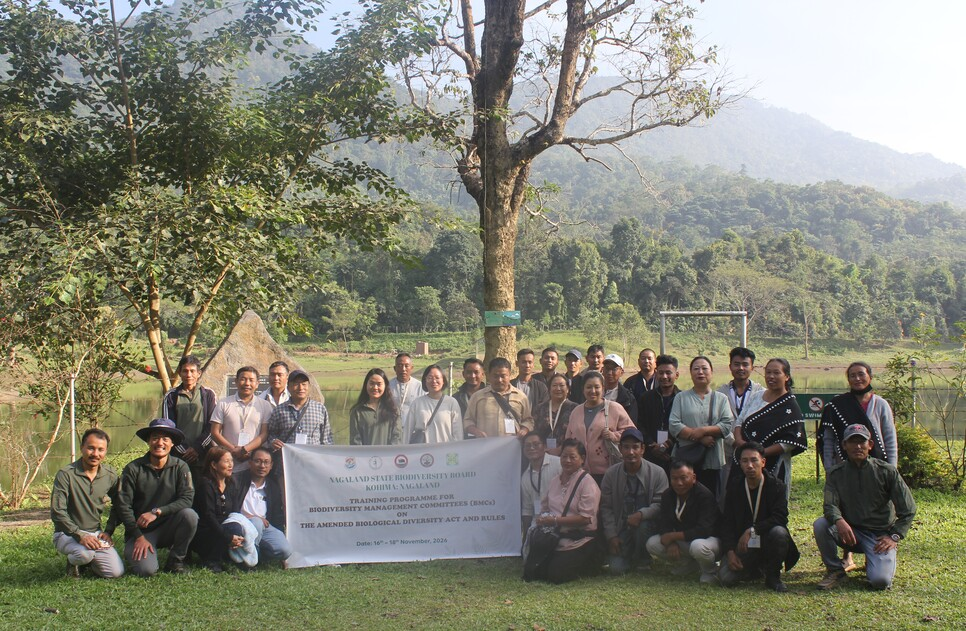
Three days of learning, interaction and field exposure under the Training Programme for Biodiversity Management Committees (BMCs) on the Amended Biological Diversity Act and Rules, organised by the Nagaland State Biodiversity Board. The programme featured insightful technical sessions and exposure visits to Khonoma and Sendenyu, highlighting community-led biodiversity conservation, sustainable resource management and livelihood initiatives.
Day 1 | 16 November 2026
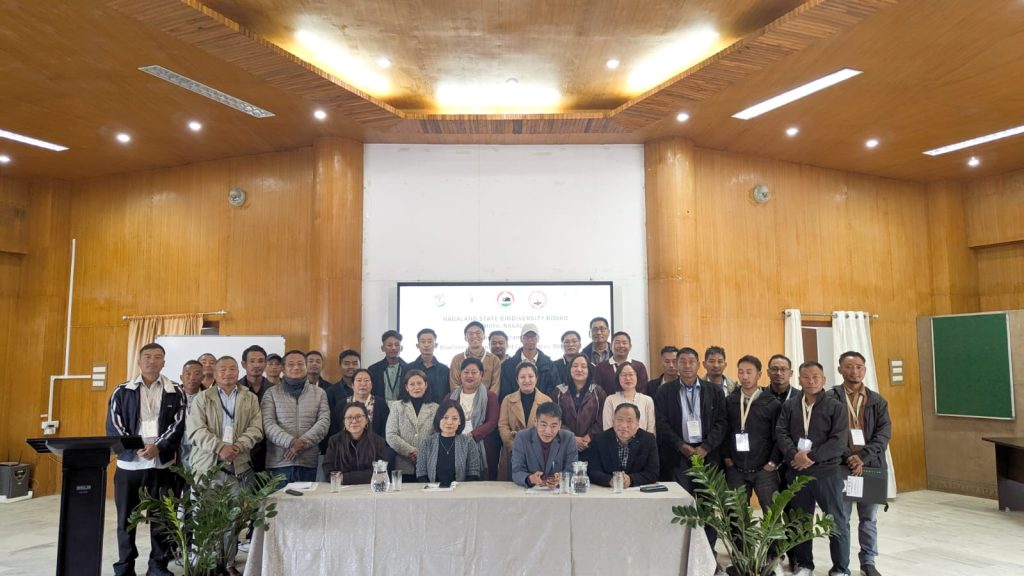
The Nagaland State Biodiversity Board commenced its three-day Training Programme for Biodiversity Management Committees (BMCs) on the Amended Biological Diversity Act and Rules at Kohima.
The inaugural session was followed by insightful technical sessions covering the Biological Diversity Act and its recent amendments, roles and responsibilities of BMCs, preparation and updating of People’s Biodiversity Registers (PBRs), Biodiversity Heritage Sites (BHS), and Access and Benefit Sharing (ABS).
The day also featured interactive discussions and experience-sharing sessions aimed at strengthening community participation in biodiversity conservation.
Day 2 | 17 November 2026
As part of the training programme, participants undertook an exposure visit to the Khonoma Biodiversity Management Committee to gain first-hand insights into community-led biodiversity conservation and sustainable resource management.
The visit highlighted the Khonoma Nature Conservation and Tragopan Sanctuary (KNCTS), alder-based jhum cultivation as a sustainable agroforestry practice, and community-managed homestays promoting eco-tourism and local livelihoods.
An enriching experience showcasing how community participation and traditional knowledge can contribute to biodiversity conservation and sustainable development.
Day 3 | 18 November 2026
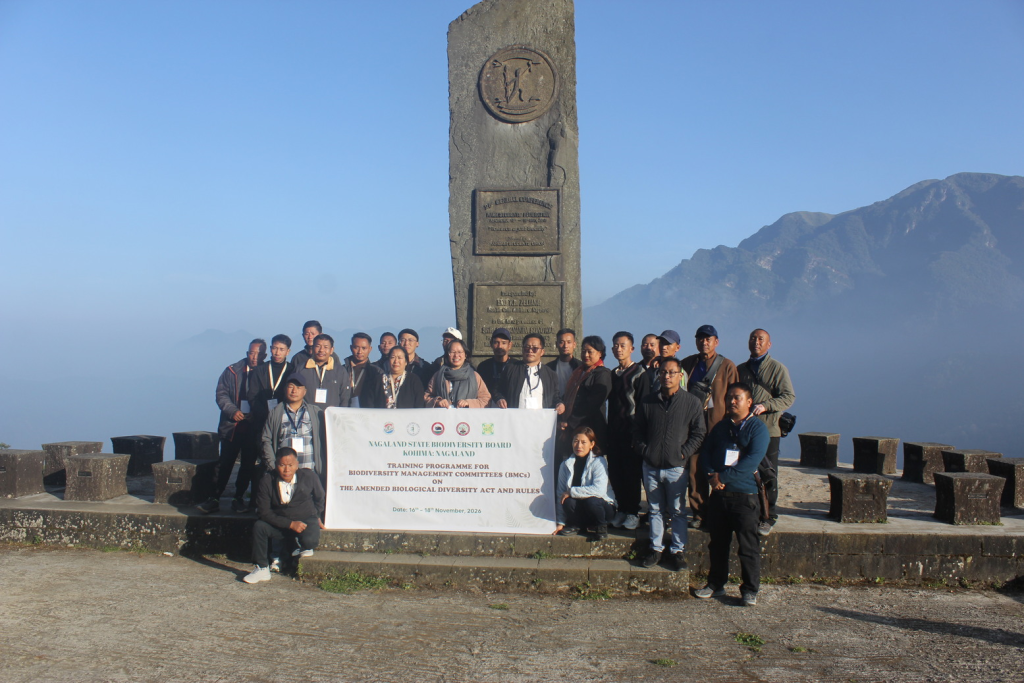
The third and final day of the training programme featured an exposure visit to the Sendenyu Biodiversity Management Committee, providing participants with valuable insights into community-driven biodiversity and wildlife conservation initiatives.
The visit highlighted the Sendenyu Community Biodiversity and Wildlife Reserve, community-led coffee plantations as a sustainable livelihood initiative, and the work of the Kenono Foundation in conserving forest biodiversity and supporting forest-dependent communities.
The exposure visit offered valuable learning experiences on integrating biodiversity conservation with sustainable livelihoods and community empowerment.